A SWARMP finding doesn’t mean your facade is fine for now, it means the repair has to close out before your next filing cycle. An UNSAFE finding means a sidewalk shed goes up before pricing even starts.
We build your repair scope directly from your QEWI’s findings, brick pointing to parapet rebuilds, so it matches the rating instead of guessing at it. AAA NY Contracting Corp handles facade restoration throughout Bronx, NY.
Call us today, our team responds on the same business day!

Every facade deficiency traces back to a specific failure mechanism, and the repair only holds if it addresses that mechanism, not just the visible symptom. Here’s what we repair most often across Bronx facades.
Mortar wears out before the brick does. Once water finds its way into a joint, freezing and thawing does the rest, prying the joint apart from the inside. We rake out what’s failed and repoint it to match the original joint profile, so the patch blends into the wall instead of announcing itself.
A parapet that’s leaning or cracked sits directly above a sidewalk, which is exactly why DOB doesn’t let it wait. How far the deterioration has gone decides the approach: repointing in place if it’s caught early enough, or taking it down and rebuilding to match the roofline if it isn’t.
Steel expands as it rusts. That’s the whole problem, expanding steel cracks the masonry sitting above it, every time. Our fix means removing the corroded steel, treating or replacing it, then rebuilding the surrounding masonry properly, so you’re not looking at the same crack again in two years.
Elastomeric coatings and crystalline waterproofing both keep water out of the wall assembly, but which one’s right depends on the substrate and how the wall was originally built. We don’t bolt this onto a masonry repair as an afterthought. It gets scoped on its own.
Synthetic stucco tends to fail first at the seams and around window penetrations. Our approach: cut back to sound material, reseal the transitions properly, and match the texture closely enough that the patch disappears from street view.
Terracotta doesn’t crack or spall the way brick does, and a mismatched patch is obvious the moment you look at it. So we match glaze and profile piece by piece, rather than papering over the section with something generic.
Once water gets behind the face, brownstone spalls in sheets, and patching just the surface only delays a failure that’s still happening underneath. We rebuild the profile using a compatible repair mortar instead of skim-coating over an active problem.
A failed window seal is one of the most misdiagnosed sources of water intrusion in older buildings; it reads like a roof leak or a facade leak until somebody actually traces it back. We reseal the entire perimeter, not just whatever gap happens to be visible.
Corroding embeds inside a balcony slab or guardrail post are a structural issue wearing a cosmetic complaint as a disguise. We inspect the embed condition directly rather than just resurfacing the visible concrete.
(914) 912-1067
Local Law 11 requires periodic facade inspections on buildings over six stories, and the report your QEWI files puts your building into one of three categories. Here’s how the deficiencies we see most often typically map to that rating.
Usually lands as SWARMP, Safe With A Repair and Maintenance Program. The building isn’t unsafe today, but DOB expects the repair scheduled and completed within the filing cycle.
Can fall anywhere from SWARMP to UNSAFE depending on how far the spall has progressed and whether it’s actively shedding material. A hairline crack and a spall that’s already dropped a piece of brick onto the sidewalk are not the same finding, even though both start as “cracked masonry” on paper.
Gacha ets an UNSAFE designation, and that triggers immediate protective measures, typically a sidewalk shed, before anything else happens. This is the finding that turns a facade repair into a time-sensitive project rather than a scheduled one.
Knowing which category your finding falls into changes the timeline, the scope, and whether a shed goes up before we even start pricing the repair. This is the mapping most facade contractors never walk a building owner through, and it’s the difference between a scope that clears your filing and one that gets flagged again next cycle.
We don’t perform your FISP inspection, your Qualified Exterior Wall Inspector does, and their findings become the scope we build against.
Once the FISP-3 report identifies the deficiencies, we develop the repair scope directly from those findings, not a generic facade package that ignores what your QEWI actually flagged. We execute the physical work, then coordinate with your QEWI on the amended report submission, so an UNSAFE finding moves to SAFE on record, not just in the field.
For buildings carrying an UNSAFE designation, sidewalk shed installation happens first, protective measures go up before repair work starts, and we coordinate removal once the amended filing clears. That sequence matters to DOB and to the pedestrians walking under your building every day until it’s resolved.
One contractor running facade work, waterproofing, and QEWI coordination under a single schedule means your amended filing reflects what actually got built, not three different scopes from three different trades interpreted three different ways.
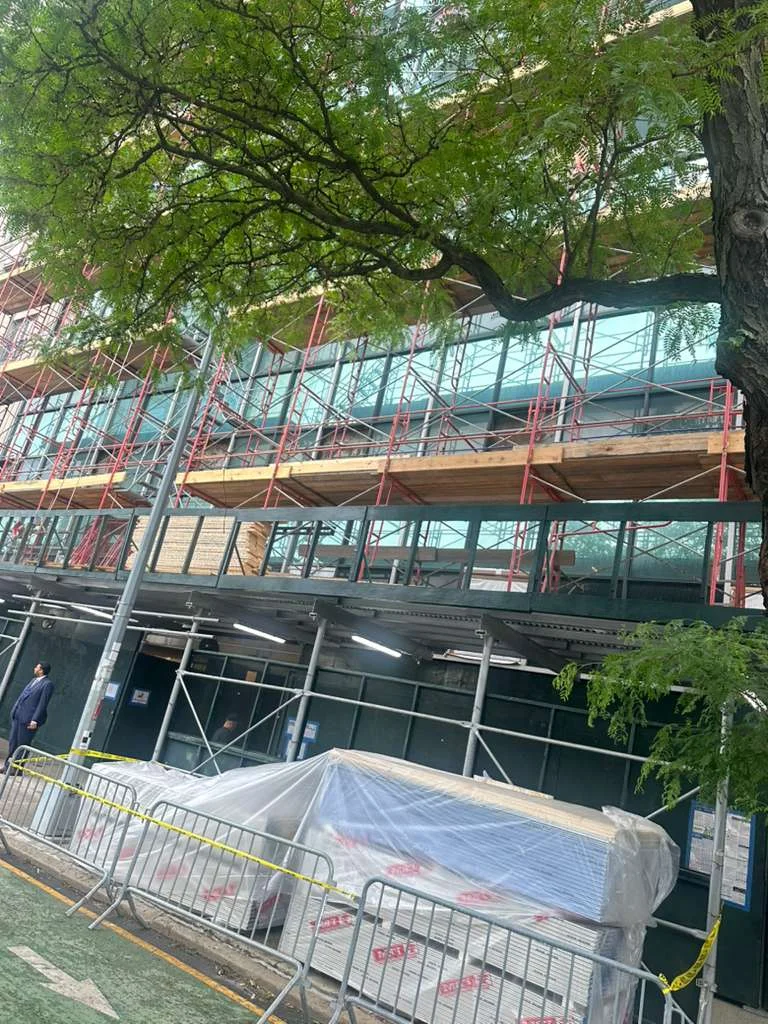

Two buildings with the same square footage can carry completely different repair bills. One might need a section of repointing along the third floor. The other might be looking at a full parapet rebuild with a sidewalk shed already up. The scope your QEWI flagged is what sets the number, not the size of the building.
We offer customized pricing built around your actual FISP findings. Once we’ve walked the affected areas and reviewed the report, you get a written scope and a real number, not a placeholder that changes once we’re on scaffolding.
An UNSAFE or SWARMP finding doesn’t get cheaper the longer it sits open. Call AAA NY Contracting Corp at (914) 912-1067 or request a facade inspection, and AAA NY Contracting Corp will build the repair scope your QEWI’s report actually calls for, coordinated from first assessment through the amended filing.
Safe With A Repair and Maintenance Program. Your building isn't unsafe right now, but the deficiency needs to be corrected within the current filing cycle, and DOB expects a documented repair plan.
Immediately. An UNSAFE designation requires protective measures, usually a sidewalk shed, right away, and the underlying repair has to bring the building back to SAFE before the shed comes down.
Yes. We build the repair scope from your QEWI's FISP-3 findings and coordinate the amended report submission once the work is complete, so the paperwork and the physical repair match.
Brick pointing addresses failed mortar joints specifically. Full facade restoration can include lintel repair, waterproofing, parapet rebuilding, and terracotta or brownstone repair, whatever your FISP findings actually call for.
Only if your building carries an UNSAFE designation or the scope requires overhead protection for pedestrian safety. We coordinate installation and removal as part of the project, not as a separate headache for you to manage.
It depends on the scope your QEWI flagged, not the size of the building. A section of repointing can wrap in days. A full parapet rebuild with a sidewalk shed up runs longer, and shed installation and removal add time on either end. We give you a real timeline once we've walked the affected areas, not before.
We flag it immediately and coordinate with your QEWI before proceeding, opening a wall shouldn't mean opening your budget without a conversation first. The amended scope gets documented the same way the original one was, so your filing still reflects what actually got built.

A New York general contractor with twenty years of permits pulled and violations cleared across all five boroughs. We’re the firm you call when you need the paperwork done right and the construction held to a higher standard.
Copyright © 2026. All rights reserved.